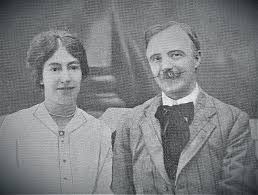
Irish poet, playwright, educator, and Theosophist.
He was one of the most influential Theosophical intellectuals active in India in the early twentieth century.

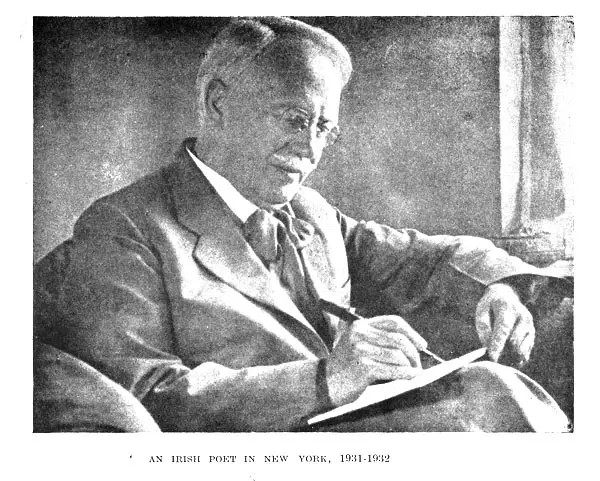
Who was he?
- Born in Belfast, Ireland.
- He began as a symbolist poet close to Yeats’s circle.
- She encountered Theosophy through her partner Margaret Cousins , a feminist activist and musician.
- Both moved to India in 1915, entering the heart of the theosophical circle in Adyar.
Why is it important in Theosophy
- He was a direct collaborator of Annie Besant , especially in the fields of education and culture.
- He taught at the Besant Theosophical College and contributed to the renewal of Theosophical education.
- He immersed himself in Indian culture and promoted intercultural dialogue between East and West.
His connection with art
Cousins was one of the crucial figures who brought Theosophy into modern Indian art and culture:
- Friend and supporter of Rabindranath Tagore .
- Among the first Europeans to understand and appreciate Indian artistic modernism.
- Art critic, he wrote fundamental texts on the spiritual role of art.
- Influential member of the Madras cultural movement and contributor to the Theosophist .
Meaningful relationships
- Margaret Cousins , wife: Theosophist, social reformer, founder of the women’s suffrage movement in India.
- Annie Besant , collaborator.
- George Russell (Æ) and the Irish Symbolic Environment.
- Tagore , with whom he began a cultural and spiritual dialogue.
In short
James H. Cousins is one of the most important cultural bridges of Theosophy:
- Irish symbolist colleague → Theosophy → Modern India
- combines art, poetry, spirituality and theosophical pedagogy
- anticipates the idea of a “planetary” culture, very much in line with your projects (Common Horizon, Asconology, Theosophy & Arts).
James H. Cousins and the founding of the Art League at Adyar (Olcott Bungalow)
Here is an authentic poem by James H. Cousins , one of his best known, from “The Master Builder” (published in the early 1900s, now in the public domain):
The Master Builder – James H. Cousins
**“I saw the Master Builder stand,
And mark the measure of the land;
I saw him with his divining-rod
Seek out the places where God trod.
He traced the pattern of the skies,
And brought the stars to human eyes;
He drew from out the eternal plan
The lines that shape the soul of man.”**
**“I saw the Master Builder stand,
And mark the measure of the earth;
I saw him with his divining rod
Seek the places where God has trodden.
He traced the pattern of the heavens,
And brought the stars to the eyes of men;
He drew from the eternal plan
The lines that shape the soul of man.”**


When James H. Cousins arrived in Adyar in 1915 , along with his wife, Margaret Cousins , he quickly entered the heart of the cultural life of the Theosophical Society. In an environment dominated by Annie Besant, Jinarājadāsa, and educational and social activities, Cousins immediately understood that art must become a central instrument in the Theosophical missThe Birth of the Art League (circa 1916–1918)
It was in Adyar , in the famous Olcott Bungalow , that James H. Cousins founded the Art League of the Theosophical Society, with three fundamental objectives:
1. Regenerating Indian art through a spiritual perspective
The Art League wanted to unite:
- classical Indian aesthetics,
- the theosophical principles of symbolism and interiority,
- emerging modernism.
2. Creating a cultural bridge between East and West
According to Cousins, art could become:
- a vehicle of universal brotherhood,
- a language of planetary harmony,
- a field of collaboration between cultures.
3. Giving an artistic identity to the theosophical community
The Theosophical Society was already a philosophical and social center. Cousins also wanted to transform it into:
- an aesthetic academy ,
- a laboratory of visual arts, music and poetry,
- a platform for dialogue between artists.
Olcott’s Bungalow , already a symbolic place of Theosophy, thus also becomes a centre for spiritual art , a small Eranos ante litteram in southern India.
Artistic relationships born thanks to the Art League
Rabindranath Tagore e Shantiniketan
The Art League amplified the bond between Cousins and Tagore, becoming a sort of theosophical outpost that ideally dialogued with Santiniketan and the Kala Bhavana .
Indian modernism
Thanks to Cousins, young artists passed through Adyar:
- painters of the new Bengal School,
- musicians linked to the revival of Indian classical music,
- symbolist poets.
The role of Margaret Cousins
He was instrumental in organizing concerts, poetry meetings, aesthetic seminars:
in fact, the Cousins transformed Adyar into an experimental artistic campus .
https://en.dharmapedia.net/wiki/James_Cousins

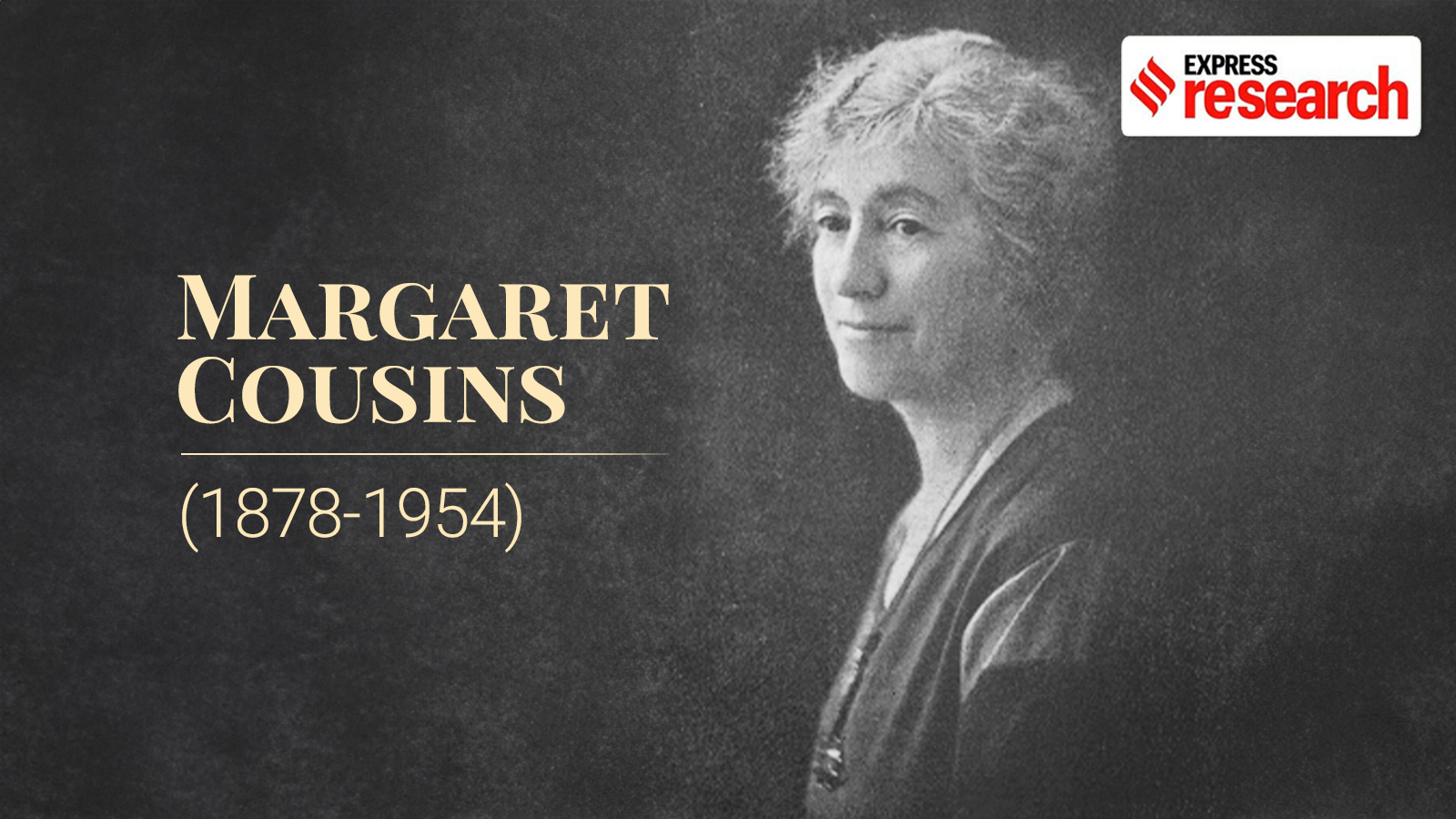

Margaret Elizabeth Cousins (1878–1954)
Musician, feminist, political activist, theosophist.
One of the most extraordinary figures of the women’s rights movement between Ireland and India.
Life and relationship with James H. Cousins
- Born in Boyle, Ireland, in 1878.
- Pianist and composer by training.
- Meet James H. Cousins within Irish cultural circles.
- They married in 1903.
- In 1915 they moved to Adyar , the seat of the Theosophical Society.
- They make a powerful intellectual couple: he is a poet and art critic, she is a musician and social activist.
Their relationship is one of the most beautiful cases of a “theosophical couple” committed to global cultural transformation.
Music, Art and Theosophy
Margaret was a profound connoisseur of Indian music:
- collaborated with Annie Besant,
- taught at Besant Theosophical College ,
- contributed to the artistic life of Adyar (concerts, lectures, reform of musical education).
His musical work was one of the aesthetic pillars of the Theosophical community.
Political and women’s activism
She is one of the founders of the women’s rights movement in India :
- Founder of the Women’s Indian Association (WIA) (1917).
- Activist for women’s suffrage in both Ireland and India.
- Arrested by the English for her political activities (a very well-known event).
- First Western woman to become a magistrate in India (Madras, 1922).
Margaret is remembered as a key figure in twentieth-century Indian feminism.
The connection with Adyar
During the years in Adyar:
- actively participates in the Theosophical Educational Trust ,
- collaborates with Besant in Indian national schools,
- supports the Art League founded by her husband James H. Cousins in the Olcott Bungalow,
- creates programs for women’s music education.
She was one of the strongest voices in giving Theosophy a social and civil role , not just a spirituWorks and writings
Margaret wrote an important autobiography:
“We Two Together” (1950)
A wonderful text about her and James’s life, full of theosophy, art, politics, and cultural adventures in India.
 Theosophy & ARTS