https://it.wikipedia.org/wiki/Arthur_Machen
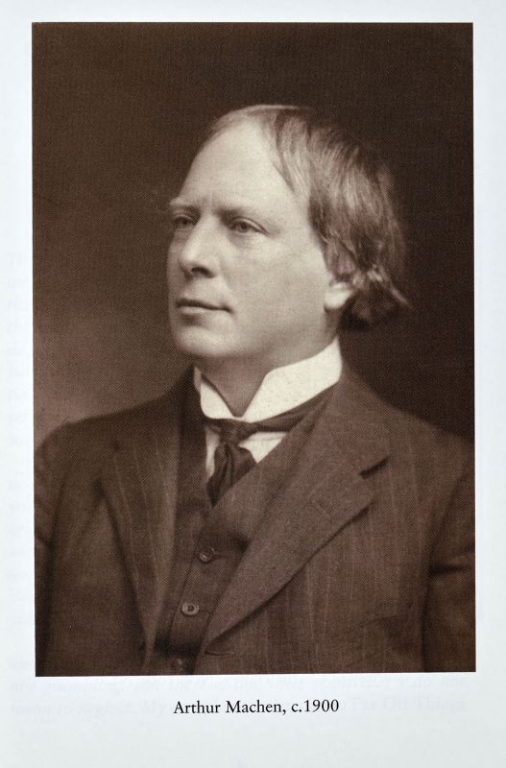


Arthur Machen
Esoteric Analysis
Arthur Machen (1863–1947) was not merely a writer of supernatural fiction. Beneath his tales of horror lies a coherent esoteric vision rooted in mysticism, sacramental symbolism, and an acute awareness of hidden realities behind ordinary perception.
Unlike decorative occultists of his era, Machen treated the invisible as ontologically real.
1. Initiation Through Shock
Machen’s central theme is the rupture of ordinary consciousness.
His protagonists encounter:
- forbidden knowledge
- veiled rituals
- ecstatic terror
- metaphysical thresholds
This structure parallels classical initiation:
Ignorance → Veil Lifting → Terror → Transformation (or annihilation)
The horror in Machen is not monsters.
It is the sudden realization that reality is deeper than reason allows.
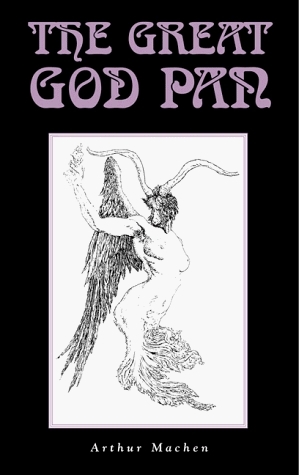
2. The Great God Pan and the Veil of Nature
The Great God Pan
This novella is often misunderstood as decadent horror. Esoterically, it is about:
- The danger of piercing the veil prematurely
- The catastrophic consequences of unprepared gnosis
- The confrontation with pre-rational forces
Dr. Raymond’s experiment is an initiatory act performed without moral purification.
Helen Vaughan represents:
- raw archetypal force
- pre-human consciousness
- the abyss beneath civilized identity
The result is spiritual disintegration.
Machen suggests:
Knowledge without inner transformation destroys.
3. The White People and Sacred Transgression
The White People
Here Machen approaches genuine esotericism.
The text presents:
- fragments of occult language
- visionary diary entries
- ambiguous ritual acts
The true horror is not moral evil but contact with the numinous beyond structure.
The girl narrator enters a liminal state between:
- childhood innocence
- pagan gnosis
- forbidden illumination
This is not satanic literature.
It is a meditation on unmediated encounter with the sacred wild.
4. The Holy Grail as Inner Reality
Machen was deeply influenced by Grail mysticism.
In works such as:
The Secret Glory
the Grail becomes:
- not an object
- not medieval nostalgia
- but a symbol of hidden sacramental reality
For Machen:
The world is not profane.
It is secretly sacramental.
The tragedy is modernity’s inability to perceive this.
5. Christian Mysticism, Not Occult Showmanship
Machen was briefly associated with the Hermetic Order of the Golden Dawn, but he did not remain a ritual magician.
His orientation was:
- mystical Christianity
- sacramental ontology
- hidden divine immanence
He believed in:
- the reality of spiritual dimensions
- ecstatic experience
- transcendence breaking into the mundane
He rejected:
- materialism
- shallow rationalism
- vulgar occult sensationalism
6. The Concept of “Ecstasy”
One of Machen’s recurring ideas is ecstasy — from the Greek ekstasis, “standing outside oneself.”
True horror for Machen is:
- stepping beyond the ego boundary
- perceiving the infinite
- dissolving rational structure
Ecstasy is:
- terrifying
- luminous
- destabilizing
It is both mystical and annihilating.
7. Pagan Residue and Pre-Christian Memory
Machen often evokes:
- Roman Britain
- ancient woods
- forgotten cults
These are not nostalgic fantasies.
They represent:
- residual archetypal memory
- the persistence of pre-Christian sacred structures
- the layered nature of reality
Civilization is a thin surface over primordial depth.
8. Machen vs. Lovecraft
Though H. P. Lovecraft admired Machen, they differ fundamentally.
Lovecraft:
- cosmic indifference
- mechanistic horror
- nihilistic universe
Machen:
- sacred terror
- metaphysical depth
- spiritual ontology
Lovecraft’s cosmos is empty.
Machen’s cosmos is saturated with meaning.
9. Esoteric Structure of Machen’s Worldview
Machen’s esoteric model can be summarized as:
- Reality is layered.
- The material world is a veil.
- Ecstasy reveals deeper strata.
- Unprepared revelation leads to madness.
- True perception requires moral and spiritual refinement.
This is closer to:
- Christian mysticism
- Platonic metaphysics
- sacramental theology
than to occult theatrics.
10. Final Assessment
Arthur Machen is not a magician of ritual manuals.
He is a visionary of hidden depth.
His work proposes:
The supernatural is not elsewhere.
It is concealed within the ordinary.
The terror lies in seeing it.
He stands at the threshold between:
- Decadent symbolism
- Mystical Christianity
- Early modern esoteric fiction
Not as an occult propagandist,
but as a metaphysical witness.
Continua quì …
 Theosophy & ARTS