René Schwaller, later known as René Adolphe Schwaller de Lubicz, was deeply connected to the Paris-based occult magazine Le Théosophe around 1915. [1]
The key details of this historical and esoteric intersection, alongside Jean Arp’s network, include:
1. Schwaller and Le Théosophe
Between 1913 and 1916, Schwaller became an active member of the French Theosophical Society. He quickly rose to become a prominent editor for Le Théosophe (founded in 1909 by Gaston Revel), where he specifically curated the section on experimental sciences. Writing under the mystical pseudonym Aor, Schwaller published sixteen articles that bridged Western alchemy, modern chemistry, and esoteric philosophy. [1]
2. Jean Arp’s 1914–1915 Paris Interlude
With the outbreak of World War I, the German-born Jean Arp fled Cologne and took refuge in Paris. During this time, he frequented occult and theosophical circles, finding common ground with Schwaller. Between 1914 and 1915, Arp executed a significant collage-based wall decoration directly inside the editorial offices of Le Théosophe. This period was highly influential for Arp, as theosophical concepts regarding spiritual geometry and cosmic forces heavily shaped his transition toward abstract and organic art. [1, 2]
3. The Connection to Nell Walden and the Der Sturm Circle
Jean Arp’s esoteric phase in Paris was directly linked to his pre-war and post-war network in the European avant-garde, most notably centered around Nell Walden and her husband Herwarth Walden. [1]
- The Berlin Nexus (1913): Just before his Parisian period, Arp was heavily promoted by Herwarth Walden in Berlin. He collaborated with the legendary expressionist magazine and gallery Der Sturm, participating in the famous First German Autumn Salon (1913). [1, 2, 3]
- Nell Walden’s Role: As a pioneer of abstract art, art collector, and the organizational backbone of the Der Sturm movement, Nell Walden built a powerful circle that cross-pollinated abstract art with spiritualism. She was one of the earliest collectors of the avant-garde, championing artists who, like Arp, sought a deeper, mystical reality behind physical forms. [1, 2, 3, 4]
- The Swiss Reconnection (1915 and Beyond): By late 1915, as wartime tensions escalated in France, Arp was forced to leave Paris and fled to Switzerland, where he famously helped launch the Dada movement at Zurich’s Cabaret Voltaire in 1916. Years later, this spiritual and artistic trajectory came full circle in Ticino, Switzerland: Nell Walden eventually emigrated to the region and bought property in Ascona—the very same town where Arp had lived when he first arrived in Switzerland, and where he frequently visited Monte Verità alongside fellow mystics and Dadaists. [1, 2, 3, 4]
Nell Walden’s arrival and presence in Ascona, Switzerland, marked a vital chapter in her life, bridging the radical German avant-garde of the 1910s with the mystical, pacifist, and artistic counterculture thriving around Monte Verità. [1, 2]
Having left Germany due to the rise of National Socialism, she officially moved to Switzerland in 1933. She took the vast majority of her massive modern art and ethnographic collections with her, seeking a safe haven for both herself and the legacy of Der Sturm. [1, 2, 3]
1. The Sanctuary: Villa Halla (Casa San Tomaso)
Upon settling in Ascona on the shores of Lake Maggiore, Nell Walden built and lived in a striking villa on the slopes of Monte Verità. [1, 2]
- The Villa’s Legacy: Originally known as Halla House (or Villa Halla), this home became an architectural and spiritual anchor in Ascona. Decades later, in 1959, the Basel collector Peter G. Staechelin acquired the property and gifted it to the mystical, rediscovered Swiss abstract painter Luigi Pericle, who renamed it Casa San Tomaso. [1, 2, 3]
- An Artistic Intersection: The home functioned as an unwitting lineage of spiritual art—first housing Nell Walden’s legendary avant-garde collection, then becoming the hermetic temple where Luigi Pericle conducted his silent creative and esoteric research. [1]
2. The Ascona Art Circle and European Avant-Garde
Ascona was already famous as a sanctuary for political radicals, anarchists, theosophists, and pioneering artists. Nell Walden integrated seamlessly into this unique network, which intersected with several figures from her past Berlin life: [1, 2]
- The Dada and Expressionist Nexus: By moving to Ascona, Walden re-entered the orbit of artists like Jean Arp, Sophie Taeuber-Arp, Hugo Ball, and Emmy Hennings, who had regularly frequented Monte Verità since the WWI Zurich Dada era. [1]
- Otto Nebel and Der Grosse Bär: The German painter and poet Otto Nebel, a close mutual friend who had also been a key member of her Der Sturm circle in Berlin, became a frequent presence in Ticino. He worked closely within the region and exhibited alongside Ascona’s prominent local artist collective, Der grosse Bär (The Great Bear), which included the visionary Russian expressionist Marianne von Werefkin. [1, 2]
- The Ethnographic Art Pioneer: In Ascona, Walden’s living room acted as an active salon. She was one of the first collectors in Europe to explicitly argue that non-European/ethnographic artifacts (which she collected passionately alongside paintings by Kandinsky, Klee, and Marc) directly influenced and catalyzed European abstract modernism. [1, 2]
Through her presence, her physical salon, and her fierce preservation of Der Sturm‘s history, Nell Walden kept the torch of the early 20th-century European avant-garde burning brightly within the utopian, nature-worshipping landscape of Ascona. [1, 2]
Nell Walden and Luigi Pericle are linked by one of the most poetic and mystical lineages in 20th-century art history, physically manifesting within the walls of a single villa nestled on the slopes of Monte Verità in Ascona.
This spiritual and artistic passing of the torch unfolds across three main connections:
1. The Sanctuary: From Casa Halla to Casa San Tomaso
The most direct and tangible bond between the two artists is the very house in which they chose to live, isolate themselves, and create:
- Nell Walden’s Safe Haven: In the 1930s, fleeing Nazi Germany, Nell Walden settled in Ascona and built a modernist villa she named Casa Halla. For years, this house protected her monumental collection of Expressionist, Cubist, and abstract masterpieces smuggled out of Berlin from the Der Sturm era [Luigi Pericle’s house hosted Nell Walden].
- Luigi Pericle’s Hermitage: In 1959, the prominent Basel art collector Peter G. Staechelin became deeply fascinated by the non-figurative ink drawings and paintings of the Swiss artist Luigi Pericle. To provide Pericle with the perfect environment for absolute isolation and silent research, Staechelin purchased Nell Walden’s former villa and gifted it to him.
- The Transmutation: Pericle moved in with his wife Nini and renamed the estate Casa San Tomaso (in honor of Thomas Aquinas). To fund this high-profile real estate acquisition, Staechelin notably sold several drawings by Egon Schiele and Gustav Klimt to the Leopold Museum in Vienna.
2. A Shared Esoteric and Abstract Lineage
Though they did not inhabit the space at the same time, the house retained its genius loci as a temple for spiritual art.
Under Walden, the villa was a fortress preserving the historical European avant-garde. Under Luigi Pericle, it transformed into a hermetic laboratory. In 1965, at the absolute peak of his international acclaim—having exhibited in London and New York alongside names like Jean Dubuffet, Antoni Tàpies, and Pablo Picasso—Pericle made a radical decision: he completely withdrew from the art market and public life. He spent the rest of his life (until his death in 2001) inside Casa San Tomaso, painting silently and immersing himself in the study of alchemy, astrology, Zen Buddhism, and theosophy—the exact same esoteric currents that had inspired René Schwaller and the early Der Sturm circle decades prior.
3. The Miraculous Rediscovery (2016)
The artistic timeline came full circle fifteen years after Pericle’s death. The villa had remained abandoned, sealed, and forgotten. In December 2016, a local couple, Andrea and Greta Biasca-Caroni (owners of the nearby Hotel Ascona), purchased the property.
Upon opening the doors of Casa San Tomaso, they discovered a monumental, untouched time capsule: thousands of unseen paintings, ink works, essays, and an extensive esoteric library hidden by Pericle. This extraordinary find led to the creation of the Archivio Luigi Pericle, reviving the legacy of a house initially dreamed up by Nell Walden and later consecrated to the cosmic avant-garde by Luigi Pericle.
Jean and Sophie Taeuber ARP


Massimo Marra – Il Numero divino e il Geroglifico regale: l’avventura spirituale di René Schwaller de Lubicz (2005).


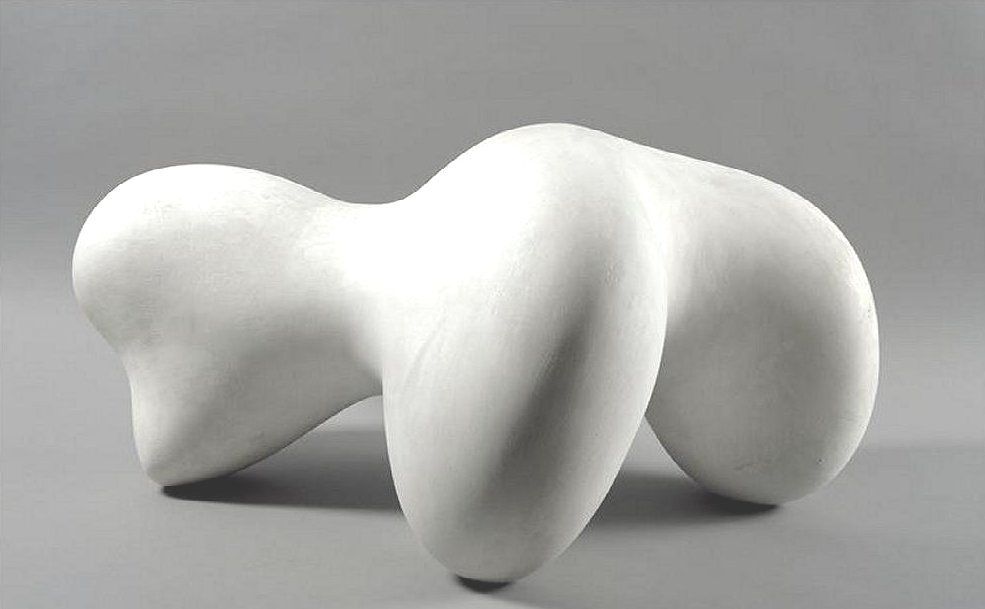
À Ascona je dessinais au pinceau et à l’encre de Chine des branches cassées, des racines, des herbes et des pierres que le lac avait rejetées au rivage. Finalement je simplifiais ces formes et unissais leur essence dans des ovales mouvants, symboles de la métamorphose et du devenir du corps.
Da Hans Arp, Wegweiser/Jalons, scritto nel giugno del 1950 ad Ascona, in Jours effeuillés, 1966.

Jean Arp nel giardino di Ronco dei Fiori, 1965
Sebbene il percorso artistico e personale di Jean Arp sia stato sondato in numerose sedi, vi è un aspetto che viene per lo più tralasciato, ossia il legame duraturo di Arp con il Ticino e, in particolare, con la regione del Verbano. Questo legame e la bellezza del luogo porteranno Jean Arp a scegliere di passare gli ultimi anni della sua vita proprio a Locarno.
Nel 1914, dopo lo scoppio della prima guerra mondiale, Jean Arp e il fratello François fuggono da Colonia, dove entrambi vivevano, e si rifugiano a Parigi. Ma poco dopo, devono abbandonare anche la Francia e riparare in Svizzera. Nel 1915 giungono ad Ascona. Una scelta che non pare essere casuale, considerato che Arp in questi anni già sviluppa interessi e attività inerenti a filosofia, religione e spiritualità in genere (Arp legge Jakob Böhme, Meister Eckhart e Lao Tse, s’interessa di misticismo orientale e frequenta teosofi come l’amico René Schwaller : (A partire dal 1924 a St. Moritz, in Svizzera, Schwaller dà vita alla “Stazione Scientifica Suhalia”, una piccola comunità consacrata alla ricerca scientifica e spirituale e al lavoro artigianale, ispirata in parte al Goetheanum del fondatore dell’antroposofia (Rudolf Steiner), dove svolgerà tra l’altro delle ricerche alchemiche. È in questo laboratorio che Schwaller riuscì ad ottenere i colori blu e rosso delle vetrate della cattedrale di Chartres senza ricorrere a procedimenti chimici. Mise pure a punto un motore funzionante con carburanti diversi, un nuovo modello di elica e il modello di un battello interamente basato sul numero d’oro, che avrebbe potuto resistere alle più forti tempeste. Ai lavori di Suhalia parteciparono, tra gli altri, anche gli artisti Hans Arp e Mirò.[9])), affini a quanto elaborato da più di un decennio nella regione e in particolare sul Monte Verità, sulla collina sopra Ascona. D’altro canto, nella regione in quegli anni vivono altri artisti e amici: innanzitutto il pittore rumeno Arthur Segal (1875-1944), che Arp conosce a Berlino nel 1913 collaborando alla rivista Der Sturm, e che vive ad Ascona dal 1914. Ad Ascona nel 1915 risiedono anche Adya e Otto van Rees, due artisti con i quali Arp collaborerà a Zurigo nel novembre dello stesso anno.
Ascona e il Monte Verità sono meta di Jean Arp anche negli anni seguenti, quando l’artista torna ad Ascona al seguito di Sophie Taeuber, che insieme ad altre giovani danzatrici soggiorna sul Monte Verità per frequentare le sessioni estive della “Scuola di danza” del danzatore e coreografo Rudolf von Laban. Ogni estate, Jean e Sophie da Zurigo giungono ad Ascona e con loro vi sono altri artisti del movimento Dada: Hugo Ball, Emmy Hennings (che si stabiliranno poi in Ticino), Hans Richter, Marcel Janco, ecc. Sul Monte Verità, unitamente alla cerchia artistica locale – non si scordino Marianne Werefkin e Alexej Jawlensky, arrivati ad Ascona nel 1918, e anche Walter Helbig, amico e collega di Arp dai tempi del Moderner Bund – gli artisti organizzano spettacoli, feste e mostre. Lo stesso Jean Arp, peraltro, ricorda la scoperta di elementi fondamentali per la sua arte proprio in riva al lago di Ascona, nel 1917.

Woty Rütgers, Sophie Taeuber e Jean Arp ad Ascona, 1925
Sempre ad Ascona, la famiglia Hagenbach aveva acquistato una casa di vacanza: Arp vi soggiorna spesso, negli anni Trenta con Sophie Taeuber e negli anni Cinquanta con Marguerite Hagenbach. Nasce così il progetto di stabilirsi nella regione e finalmente, nel 1959, Arp prende dimora a Locarno-Solduno, sempre insieme a Marguerite Hagenbach. Ben lungi dal vivervi un lento declino o una sorta di pensionamento, Arp continua a lavorare: oltre a stabilire uno studio in casa propria, s’insedia anche in uno degli atelier del complesso che lo scultore Remo Rossi crea nella zona “Saleggi” di Locarno. Qui Arp – a fianco di Hans Richter e Italo Valenti, anche loro attivi negli atelier – lavora regolarmente con l’aiuto degli assistenti Alberto Meli e Candido Epis, che realizzano le sue opere tardive.

Alberto Magnelli, Hans Richter, Jean Arp e Marguerite Arp a Locarno, 1965
Nel 1965, grazie all’intermediazione di Remo Rossi, viene allestita nelle sale del Castello Visconteo di Locarno una mostra con opere di Arp e di altri artisti della collezione Arp-Hagenbach. Ancora prima dell’inaugurazione dell’esposizione, Arp fa dono delle opere esposte alla Città di Locarno, con l’obiettivo di porre le basi per la fondazione di un museo di arte moderna. In segno di riconoscimento la Città conferisce alla coppia la cittadinanza onoraria.
Jean Arp si spegne a Basilea il 7 giugno del 1966 e riposa nel cimitero di Locarno.
Veronica Provenzale
A partire dal 1924 a St. Moritz, in Svizzera, Schwaller dà vita alla “Stazione Scientifica Suhalia”, una piccola comunità consacrata alla ricerca scientifica e spirituale e al lavoro artigianale, ispirata in parte al Goetheanum del fondatore dell’antroposofia (Rudolf Steiner), dove svolgerà tra l’altro delle ricerche alchemiche. È in questo laboratorio che Schwaller riuscì ad ottenere i colori blu e rosso delle vetrate della cattedrale di Chartres senza ricorrere a procedimenti chimici. Mise pure a punto un motore funzionante con carburanti diversi, un nuovo modello di elica e il modello di un battello interamente basato sul numero d’oro, che avrebbe potuto resistere alle più forti tempeste. Ai lavori di Suhalia parteciparono, tra gli altri, anche gli artisti Hans Arp e Mirò.[9]

